A standard unit is the right call when you need stalls, not amenities. One standard toilet covers roughly 50 to 75 people for a four-hour event with no alcohol, or a crew of up to 10 working a 40-hour week with weekly…
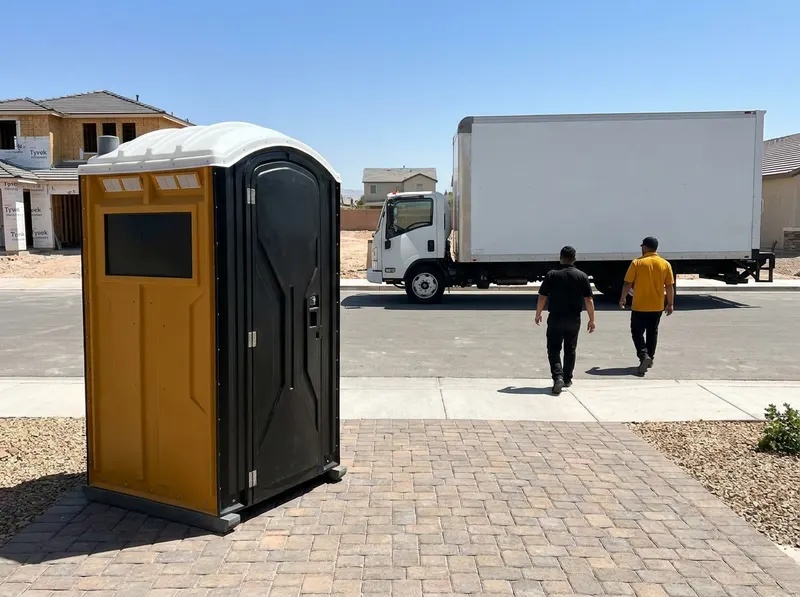
A standard unit is the right call when you need stalls, not amenities. One standard toilet covers roughly 50 to 75 people for a four-hour event with no alcohol, or a crew of up to 10 working a 40-hour week with weekly service. If your guests will be drinking, plan closer to one unit per 40 to 50 people, because usage roughly doubles after the second hour. Where a standard unit stops making sense is a wedding, a corporate hospitality tent, or any event where guests are dressed up — that is a restroom trailer or a flushing deluxe unit, not a flushless standard. The trade-off is honest: a standard unit costs a fraction of a trailer, needs no water hookup and no generator, and can sit on gravel, dirt or a graded pad where a trailer cannot go. It also has no sink, no climate control and no interior lighting unless a lit model is requested.
Las Vegas heat changes how these units get placed and serviced. A dark enclosure sitting in full afternoon sun on an unshaded lot off Craig Road or out by Las Vegas Motor Speedway will run far hotter inside than the ambient temperature, and heat is what drives odor. We position the door away from the west-facing afternoon sun and ask for a shaded or partially shaded spot whenever the site allows one — the north side of a building, under a mature ash or mesquite, or behind a trailer. On summer jobs and on any 12-hour event, twice-weekly or day-of service beats a single weekly pump-out, and we will say so up front rather than let a unit go sour by hour four. Dust is the other Vegas factor: wind off open desert lots in Sunrise Manor and the far edges of Centennial Hills coats interiors fast, so wipe-down is part of each service visit, not an add-on we discover later.
Access is the question that decides most orders, so ask it early. A standard unit measures roughly 44 by 48 inches at the base and needs about a 36-inch clear opening to be walked through a gate on a dolly — that matters for backyard remodels in Rancho Charleston (Scotch 80s) and Huntridge, where the only route is a side gate past an AC condenser. Alley placement works well in the Downtown Arts District and for First Friday-adjacent setups, but the unit has to sit on a flat, level surface where the door can swing fully open and the service truck can reach within hose distance. Tight retail lots along the Spring Mountain corridor in Chinatown usually mean giving up one parking stall and cones around it. Summerlin, The Lakes and Peccole Ranch HOAs frequently have rules about street placement and how long a unit can be visible from the curb — check with your association before the delivery date, because we cannot override those rules. Park events at Sunset Park or Floyd Lamb Park at Tule Springs, and anything near Red Rock Canyon National Conservation Area, run on permit conditions that dictate exactly where units may stand.
One number, no surprises. The quote we give includes delivery, placement, pickup and the scheduled service visits — the three line items competing bids most often leave off a low per-week headline price. If a bid you are comparing looks cheaper, read it for delivery, pickup and per-service charges before you decide. Extra fees exist and we publish them: rush or weekend delivery, additional service visits beyond the schedule, and off-pavement or long-haul placement outside the paved valley. You get a confirmed delivery window, and we call if anything moves. Call (725) 348-2629 with your date, address and unit count, or ask for a free on-site look if access is the unknown.
Every job gets a firm, written price after a free on-site visit.
Tell us about your standard portable toilet rental job in Las Vegas and we'll send a clear, written quote — usually the same day.
 PrimeCity Potty Group